Movies and Series IPTV: One Subscription, More Choice
A family film night should not begin with five different apps, forgotten passwords and the message that the programme is unavailable in your region. Movies and series IPTV gives viewers a more direct route: live television, on-demand films and box sets delivered through one internet-based service. For UK and Ireland households watching across Smart TVs, Firesticks, tablets and mobiles, that convenience can make a real difference.
The best experience is not simply about having a huge catalogue. It is about finding something worth watching quickly, getting a clear picture when the big match is on, and knowing every person in the house can use the service without a technical headache. Choice matters, but reliable access matters just as much.
What movies and series IPTV should deliver
IPTV means television delivered over an internet connection rather than a traditional aerial, satellite dish or cable line. A well-built service can bring live channels, video on demand, electronic programme guide information and playback options together in one place. That makes it attractive to viewers who are tired of paying separately for films, dramas, sport, children’s programmes and international channels.
For films and series, the on-demand side is where the value becomes obvious. Instead of planning around a broadcast schedule, you can browse by genre, search for a title, return to an episode later or choose a family film after tea. A strong catalogue should cover more than recent releases. Look for established cinema, new series, documentaries, kids’ viewing and programming from the UK, Ireland, Europe, the US and beyond.
Live TV still has its place. News, sport, entertainment channels and seasonal events are better when they are happening, not days later. The practical advantage of IPTV is having live and on-demand viewing in the same app or device setup, rather than constantly swapping between subscriptions.
There is one non-negotiable point: always use a provider that is authorised to make its content available where you are watching. IPTV is a delivery method, not a licence in itself. Content rights vary by country and service, so clear provider information and legitimate access should be part of every buying decision.
A large catalogue is only useful when it is easy to use
A headline number can be impressive, but it is not the whole story. If the search function is poor, categories are messy or series episodes are missing, even a large library soon becomes frustrating. The real test is whether you can go from opening the app to watching something in a few clicks.
Search, categories and episode order
Good movies and series IPTV should let you search by title and browse by genre without endless scrolling. Clear artwork, accurate descriptions and sensible categories make the difference on a busy Friday night. For series, season and episode order is particularly important. Nobody wants to start a drama halfway through because the library is badly organised.
Favourites and watch-history features are useful too. They reduce the time spent searching and make it easier for each household member to keep track of what they are watching. On a shared television, this is a small feature with a big impact.
Frequent content updates
A library can look excellent on the day you subscribe and feel stale a few weeks later. Regular updates are what keep an IPTV package worth using. New films, recently aired episodes and refreshed channel line-ups give viewers a reason to come back rather than treating the subscription as a one-month experiment.
Ask how often on-demand content is updated and whether the service maintains older favourites as well as adding new titles. The answer depends on your viewing habits. A household focused on new drama will have different expectations from someone who mainly watches classic films, international television or children’s content.
Picture quality depends on more than the provider
4K, Full HD and HD labels are appealing, especially on a larger television. But the result you see at home depends on the full setup: the stream supplied, your broadband speed, Wi-Fi strength, device capability and the app you use. A 4K-compatible TV alone does not guarantee a 4K viewing experience.
For HD streaming, a stable home connection is usually more useful than an eye-catching maximum-speed figure. If several people are gaming, video calling or streaming at once, your available bandwidth can drop quickly. Where possible, connect a main streaming device by Ethernet. If Wi-Fi is your only option, place the router sensibly and avoid relying on a weak signal through several walls.
Anti-freeze technology and high uptime are valuable service features, particularly during peak viewing hours. Still, no provider can fix a home network that repeatedly cuts out. Before blaming the service, test another device, restart the router and check whether the problem happens on every channel or only one stream. That simple check can save a lot of time.
Choose a setup that fits how you actually watch
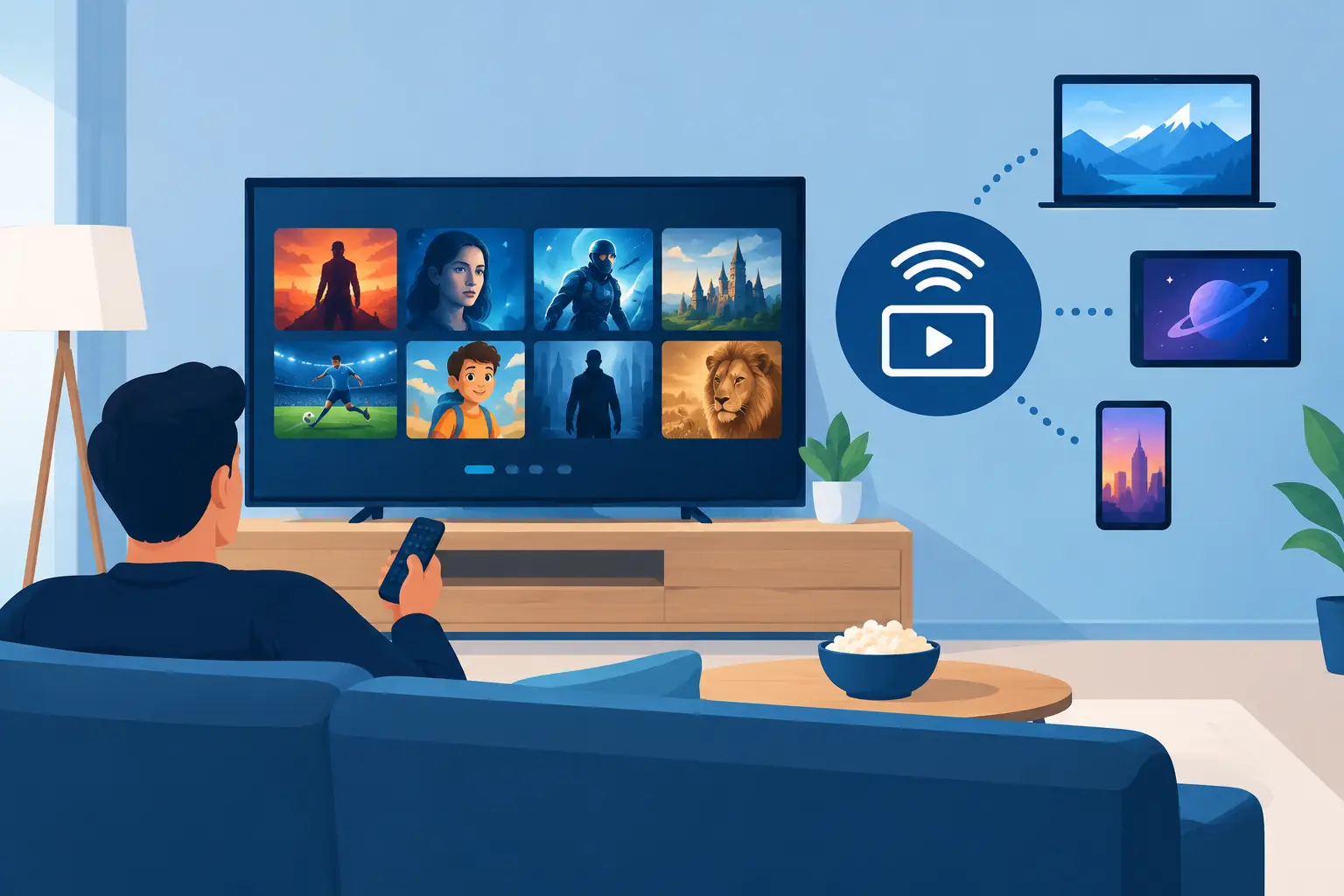
The right IPTV setup is the one your household will use comfortably. A living-room Smart TV is ideal for most shared viewing, while a Firestick or compatible streaming box can be a practical option for older televisions. Mobile devices and laptops are useful when travelling, in a bedroom or when someone else has control of the main screen.
Apps such as TiviMate and IPTV Smarters Pro are popular because they can present live channels, electronic programme guides and on-demand libraries in a familiar layout. Compatibility should be checked before purchasing, especially if you have an older television model or a less common operating system.
One detail catches many people out: a one-device subscription generally means one active stream at a time. If two rooms need to watch different programmes simultaneously, you will normally need an additional subscription or a plan that specifically includes multiple connections. It is better to decide this before purchase than discover it during a cup final or family film night.
What to check before paying for an IPTV subscription
Price matters, but the cheapest option is not always the best value. A low monthly cost can be attractive, yet it means little if activation is slow, the app is hard to configure or support disappears when you need help. Look at the full offer rather than one number on a price page.
A useful checklist includes these practical points:
- A trial period, so you can test picture quality, categories and device compatibility on your own connection.
- A clear refund policy and straightforward plan length, particularly if you do not want a long commitment.
- Fast activation instructions that explain which app to use and how to add the service.
- Responsive support for setup questions, playback issues and account access.
- Transparent information about content availability, location restrictions and authorised viewing.
TelevoiTV advertises live TV alongside a substantial on-demand catalogue, 4K, FHD and HD options, daily updates, built-in VPN protection and rapid activation. For viewers comparing packages, these are the types of details worth checking in a trial rather than taking on trust. Test the channels and genres you genuinely watch, not just the first titles shown on the home screen.
Make the first week count
Once your service is active, spend ten minutes setting it up properly. Add favourite live channels, check the electronic programme guide, search for a few series you plan to watch and test playback on your main device. Try it at the time you are most likely to watch, when household internet use is at its busiest.
If subtitles, audio preferences or parental controls are available, set them early. Families benefit from having children’s content easy to find and inappropriate material kept out of casual browsing. Multilingual households may also want to organise favourite international channels rather than hunting for them each time.
Finally, judge the subscription by the ordinary evenings, not only the first night of browsing. The right movies and series IPTV service should make it easier to choose a film, follow a series and keep up with live television without adding another layer of expense or fuss. Start with a short plan or trial, test it on the devices you already own, and let your actual viewing habits decide.